
ISSUE 4

ISSUE 4
featuring short fiction by Helen Phillips, Amy Bloom, & David James Poissant
ABOUT THE ISSUE
Issue 4 begins with David James Poissant’s “Venn Diagram,” a story from his debut collection The Heaven of Animals, which we urge you purchase as soon as is humanly possible. We met Jamie when we were all at grad school together at the University of Arizona in Tucson. Since then, we’ve followed his career as he’s received numerous honors and published in prestigious journals and magazines. Now, we’re pleased to feature one of Jamie's award-winning short stories and to share his insights in an interview.
This issue also features not one, not two, but three revelatory drafts of a short, magical, and deft piece of writing by Helen Phillips from her collection And Yet They Were Happy. Helen's story also inspired Mark Vollenweider's mysterious and intense artwork featured on the cover and throughout this issue.
And finally, we’re delighted that Amy Bloom was willing to open her archives and share an early draft of a story from a short story cycle that appeared in Where the God of Love Hangs Out. In addition to an interview with Bloom, the section includes an editors’ discussion about the draft and story and what we found intriguing that may help spark further conversations between readers, writers, editors, instructors, and students.

featuring short stories by Christopher Boucher & Dylan NIce
ABOUT THE ISSUE
Issue 6 opens with Dylan Nice’s “She Likes You,” an exquisite and subtle flash fiction piece that began as a rambling 19-page horror story of sorts inspired by an anxiety dream. The radical re-thinking and re-framing that happens between first and final drafts makes for a wonderful lesson in how one might go about getting to the very essence of an experience or emotion. So often we tell students that revising isn’t just line editing, and Nice’s drafts demonstrate perfectly how stories can transform, shape-shift, and evolve into completely new creatures during the revision process.
Christopher Boucher’s “Trout Heart” is an absurd account of a man’s experience of having his heart replaced by a fish that works as a substitute heart. Conceived of for a Richard Brautigan Anthology (the forthcoming Mine is Clouds), the story surprises at every turn—unpredictable and unnatural physical laws, laugh-out-loud dialogue, and genuine heartache. The final draft of the story is a knockout. Excerpts from the 36 (that’s thirty-six!) early drafts reveal a ferocious dedication to the writing and rewriting process. This unique early draft section contains false starts, characters that vanish from draft to draft, major tonal shifts, perspective swaps, theme pivots, and more. All along, though, you can see the writer at work on a single piece that contains—from first draft to final draft—a spirit that Boucher is wrestling into submission (or perhaps fishing for).
This issue’s cover artist, Michael Tarbi, is meticulous. Beginning with a photograph, the painting, “Leo,” demonstrates attention to detail and precision at each stage. Tarbi builds a scale grid and plots out each square centimeter of this fantastic, evocative portrait. His process showcases the tremendous preparation, planning, and patience with exhilarating results. Tarbi is also our first artist to come to us through unsolicited submissions, and we’re so pleased he had the patience not only for his artwork but for our extended production process.

RESTOCK PLANNED FOR 2020 - PLEASE CHECK BACK FOR UPDATES
featuring poetry by Elisa Gabbert, Rauan Klassnik, Lara Glenum, & Rodney Koeneke
ABOUT THE ISSUE
Revision is not the process of “making a poem good,” nor “a good poem great.” Revision is changing a poem to more closely match its poet’s vision of its subject, whether that subject be denotative or perspective, story or song. The quality of a poem, like everything else in the world, is subjective. Great poets aren’t writing and revising to be great. Great poets are writing and revising because they’re interested in getting at something they’re really interested in.
This, it seems, can be anything. Lara Glenum weaves the attitudes and narratives that shape Western culture in with Western’s cultures greatest shames and crimes and excesses. Rodney Koeneke applies a lucidity of reference and perspective distinctly internet to the intimately personal. Rauan Klassnik twitches between sex & death, sacred & profane, and funny-ha-ha & funny-oof. Elisa Gabbert uses the strategies of the intellect to call attention to the ways in which the physical trumps the cerebral.
Just as poems can be about probably any subject tackled nearly any way, approaches to revision are, so far as we can tell, varied and endless. At the beginning of the editing process, the advice of others can be one of the easiest ways to achieve the disconnect from your work that will help improve it. Over time, however, one assembles an arsenal of tricks to help get one’s poems as close to their original intent, or eventual intent, or non-intent, or whatever, as possible.
We believe you’ll find something in the following pages striking and engaging enough to change your perceptions about what a poem can do, and we hope you carry it into your own writing practices. We appreciate everyone who took the time to share their work and thoughts for our inaugural all-poetry issue.
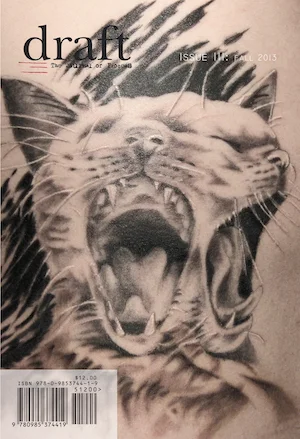
featuring fiction, poetry, and nonfiction by Roxane Gay, Matt Hart, and Joe Wilkins
Our featured cover artist for issue three is Christian Zink, a tattoo artist in New York City. He and John O’Hara (also a tattooist at The Queen’s Ink) collaborated on a tattoo, inked onto John’s skin for our cover art.

featuring fiction by Alicia Erian & poetry by Donald Dunbar
ABOUT THE ISSUE
Issue 2 is full of firsts. In it, we’re very excited to include our first poet, Donald Dunbar, whose first book Eyelid Lick won the 2012 FENCE Modern Poets Book Prize. Another first comes in the interview with Dunbar—a nod to the benefits of LSD. The interview is exciting, because the poet is so candid and thoughtful, uncovering some of the most mysterious processes of generating, revising, and crafting a series of poems. Whether you are working on a novel, short story, play, poem, or memoir, this poet’s advice on writing is helpful and liberating.
We’re also featuring the first story from Alicia Erian’s exquisite collection, The Brutal Language of Love. You might know Erian for her novel Towelhead, which was turned into a movie in 2007, directed by Alan Bell. We were alerted to her short stories by the always fabulous Roxane Gay, and we’re so glad we were. Erian’s stories are combine dark wit, surprising characters and a lot of heart in a collection that’s unforgettable. Standing Up To The Superpowers, in this issue, will probably wind up being one of your new favorite stories, as it has for us.
And finally, draft is featuring writing exercises submitted by our readers for the first time in this issue.
featuring short fiction by Mary Miller and Greg Hrbek
ABOUT THE ISSUE
Before there was draft, there was draft: the preview, of which we printed a 50-copy run and handed out to folks at AWP Washington D.C. in order to promote this idea that we had. This issue has never before been for sale.
From draft to draft in Greg Hrbek’s work on “Sagittarius,” which was anthologized in Best American Short Stories, you see a writer pushing a beautiful story into surprising new territory, until the key to unlocking its full heartbreaking potential reveals itself. There are new perspectives, new characters, new and pivotal scenes that transform the story, only to be discovered in the final rewrite.
Mary Miller’s story, Once Upon a Time, Bananas, showcases her trademark charm with wry, understated prose that suggests worlds beyond what’s on the page, especially in a micro first draft that gets blown up, expanded, and transformed with a long-form revision. Each draft is a fully realized gem, but the facets sparkle a bit different, depending on the version, both of which teach volumes about the form.

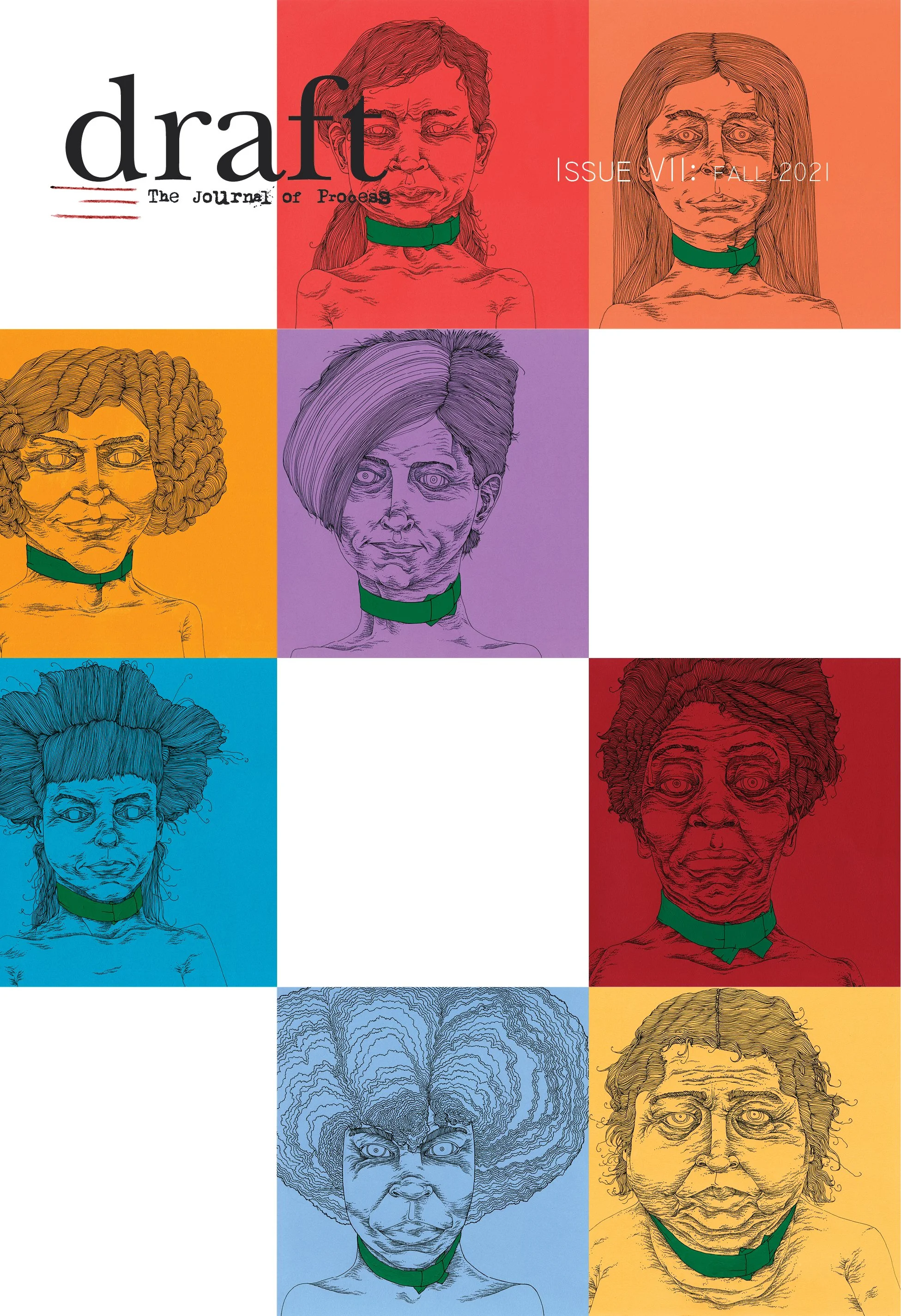
Limited-edition postcards by Mark Vollenweider with images inspired by Carmen Maria Machado’s story “The Husband Stitch.”
FROM THE ARTIST:
I read “The Husband Stitch” a few times, & kept having an idea about eight portraits of women with green ribbons around their necks. I was enjoying drawing on a stack of colored card stock with a .60 Rapidograph, & decided to keep using those materials for this project. At first, I was going to draw ornate oval frames around the women’s portraits, but decided against it.
Have I seen the 1985 movie “Return to Oz”? Yes, however I don’t know if it was an inspiration for the cover. At least that I’m consciously aware of. I must say, the scenes with Mombi’s head collection still terrify me in the best way.
featuring short fiction by Helen Phillips, Amy Bloom, & David James Poissant
ABOUT THE ISSUE
Issue 4 begins with David James Poissant’s “Venn Diagram,” a story from his debut collection The Heaven of Animals, which we urge you purchase as soon as is humanly possible. We met Jamie when we were all at grad school together at the University of Arizona in Tucson. Since then, we’ve followed his career as he’s received numerous honors and published in prestigious journals and magazines. Now, we’re pleased to feature one of Jamie's award-winning short stories and to share his insights in an interview.
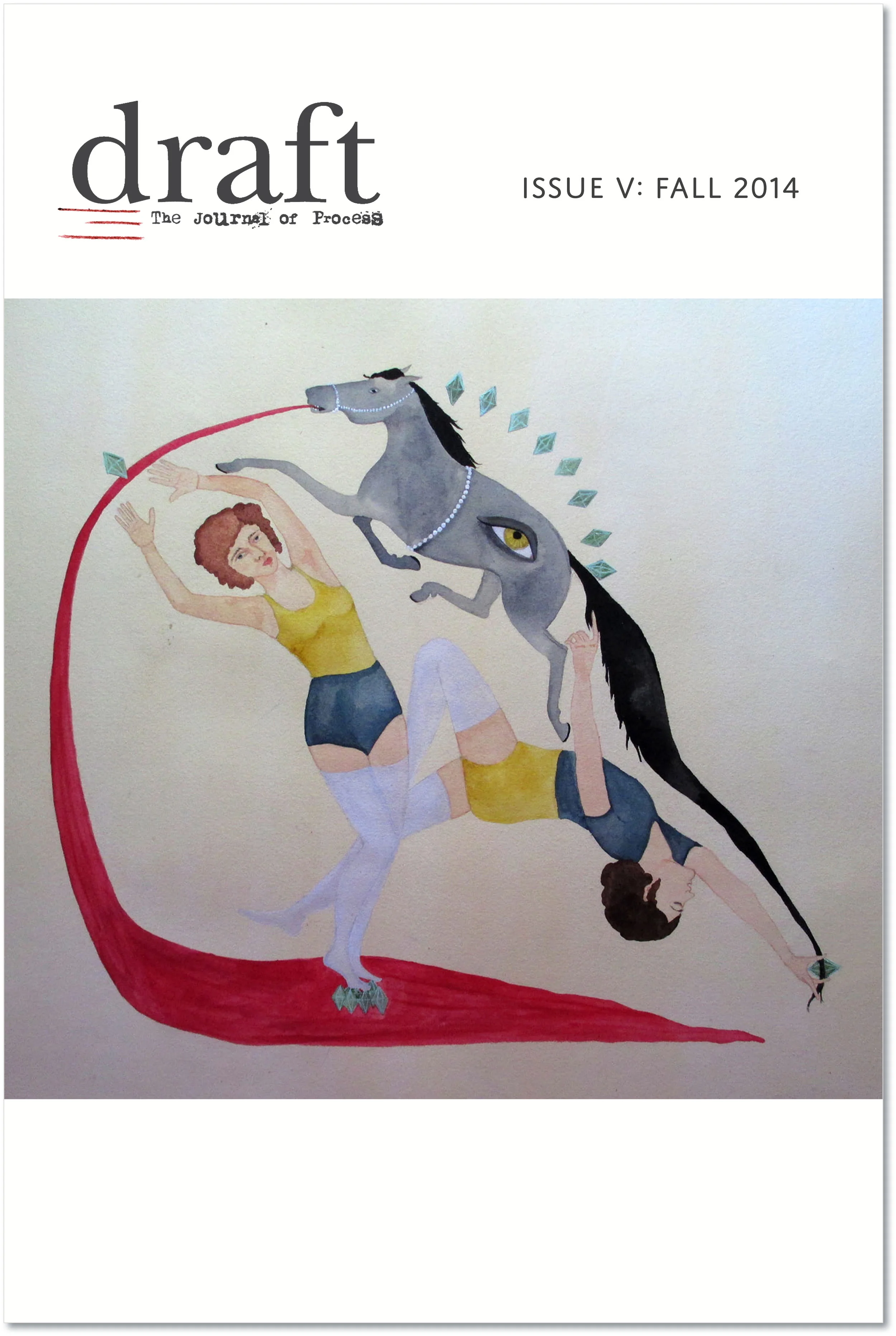
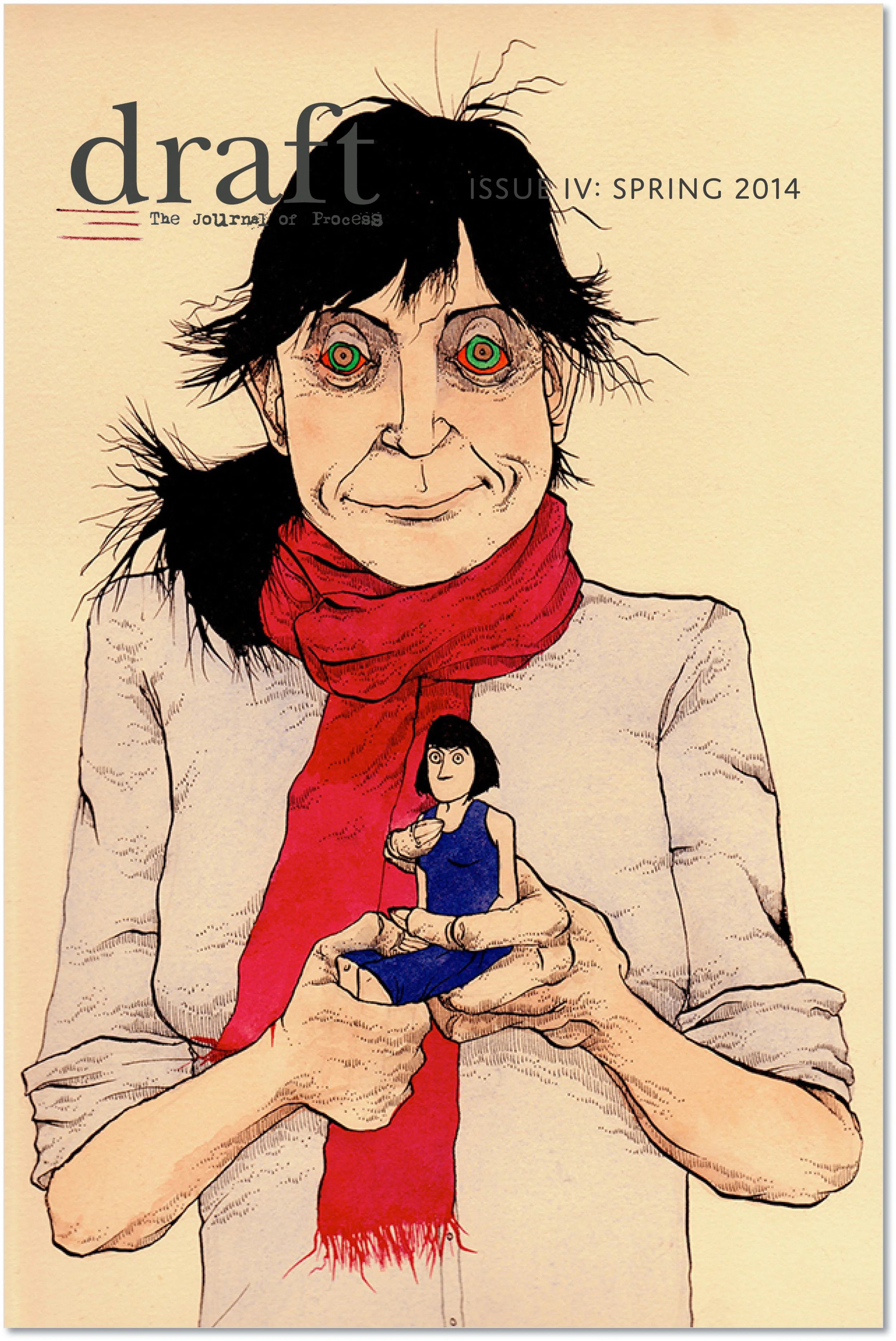
This issue also features not one, not two, but three revelatory drafts of a short, magical, and deft piece of writing by Helen Phillips from her collection And Yet They Were Happy. Helen's story also inspired Mark Vollenweider's mysterious and intense artwork featured on the cover and throughout this issue.
And finally, we’re delighted that Amy Bloom was willing to open her archives and share an early draft of a story from a short story cycle that appeared in Where the God of Love Hangs Out. In addition to an interview with Bloom, the section includes an editors’ discussion about the draft and story and what we found intriguing that may help spark further conversations between readers, writers, editors, instructors, and students.

featuring stories by Stacey Richter & Matt Bell
ABOUT THE ISSUE
In this issue, Stacey Richter, one of our very favorite writers, gives us a new lens on her story “Velvet,” which first appeared in her collection Twin Study. “Velvet” re-imagines the hero’s journey with a butt-sniffing dog as the protagonist, and Stacey elucidates her process in a hilarious and thoughtful interview.
Matt Bell’s “Hold On To Your Vacuum” explores the darkly playful realm of a high-stakes game. An early draft that originated from a dream, Matt's story became a controlled tale of regret and hope through careful revision on the global and sentence level. Matt shares his experience writing and rewriting "Hold On To Your Vacuum" in an interview that covers the music he listened to while drafting to the detailed work of syntax and diction revision.
**For Kindle users, please purchase your eBook directly from Amazon**
featuring screenplay drafts by director Chris Radcliff, Carmen Maria Machado’s groundbreaking short story “The Husband Stitch,” and a never-before-published Ursula Le Guin draft written in 1963, with artwork by Mark Vollenweider
ABOUT THE ISSUE
Issue 7 opens with a script, the first time we’ve featured screenwriting in our journal. Chris Radcliff’s film, The Strange Ones, is an unsettling quest story, centered on a young boy with a secret past and an ambiguous relationship with his traveling companion. The film maintains mystery and suspense throughout. The screenplay is a marvel of restraint and selective omission, showing respect and trust in its audience to follow along and invent for themselves. In this issue, we have a sequence of scenes from the original draft and the final shooting script of The Strange Ones, revealing reworked moments, shifted settings, and reimagined characters. Creating the mystery on screen was accomplished through hard choices and a lot of discovery on the page. The conversation with Radcliff about the process of writing and rewriting for a visual medium was a fascinating shift for draft, and we hope to feature more work by writers across disciplines.
Carmen Maria Machado’s short story collection Her Body and Other Parties has been a cultural sensation since its publication in 2017, demonstrating that bold, feminist-forward stories that bend genre and embrace experimentation not only can sell, but are precisely what a vast readership are hungry for. In this issue, we feature a first draft of one of her most widely-read stories, “The Husband Stitch.” Carmen’s process of writing this story is a wonderful example of how a writer can use an urban myth to inspire her own work, how source material can enrich a story that otherwise feels thin, and how to take cues from oral storytelling to augment and contextualize a story.
Last but certainly not least, we’ve managed to retrieve a snippet of a first draft from none other than the sci fi goddess herself Ursula Le Guin. And what an honor it is to print in our pages. While the first draft and final work are not direct re-write comparisons, you’re able to see Le Guin’s first stab at her Earthsea series, and read that against the vastly revised and rethought prose of her finished book. As we weren’t able to speak with Le Guin about her revisions, we both synthesized our own thoughts about the drafts in our own short critical pieces after the drafts, arguing both for and against her revision in ways that we hope are thought-provoking and instructive.
Our cover art comes from a draft favorite Mark Vollenweider, whose impeccable line work and imaginative renderings bring to life the many women of Machado’s story. Postcards of each woman on the cover of Issue 7 are available for purchase on our site.
**For Kindle users, please purchase your eBook directly from Amazon**
Short stories by Christopher Boucher & Dylan NIce
ABOUT THE ISSUE
Issue 6 opens with Dylan Nice’s “She Likes You,” an exquisite and subtle flash fiction piece that began as a rambling 19-page horror story of sorts inspired by an anxiety dream. The radical re-thinking and re-framing that happens between first and final drafts makes for a wonderful lesson in how one might go about getting to the very essence of an experience or emotion. So often we tell students that revising isn’t just line editing, and Nice’s drafts demonstrate perfectly how stories can transform, shape-shift, and evolve into completely new creatures during the revision process.
Christopher Boucher’s “Trout Heart” is an absurd account of a man’s experience of having his heart replaced by a fish that works as a substitute heart. Conceived of for a Richard Brautigan Anthology (the forthcoming Mine is Clouds), the story surprises at every turn—unpredictable and unnatural physical laws, laugh-out-loud dialogue, and genuine heartache. The final draft of the story is a knockout. Excerpts from the 36 (that’s thirty-six!) early drafts reveal a ferocious dedication to the writing and rewriting process. This unique early draft section contains false starts, characters that vanish from draft to draft, major tonal shifts, perspective swaps, theme pivots, and more. All along, though, you can see the writer at work on a single piece that contains—from first draft to final draft—a spirit that Boucher is wrestling into submission (or perhaps fishing for).
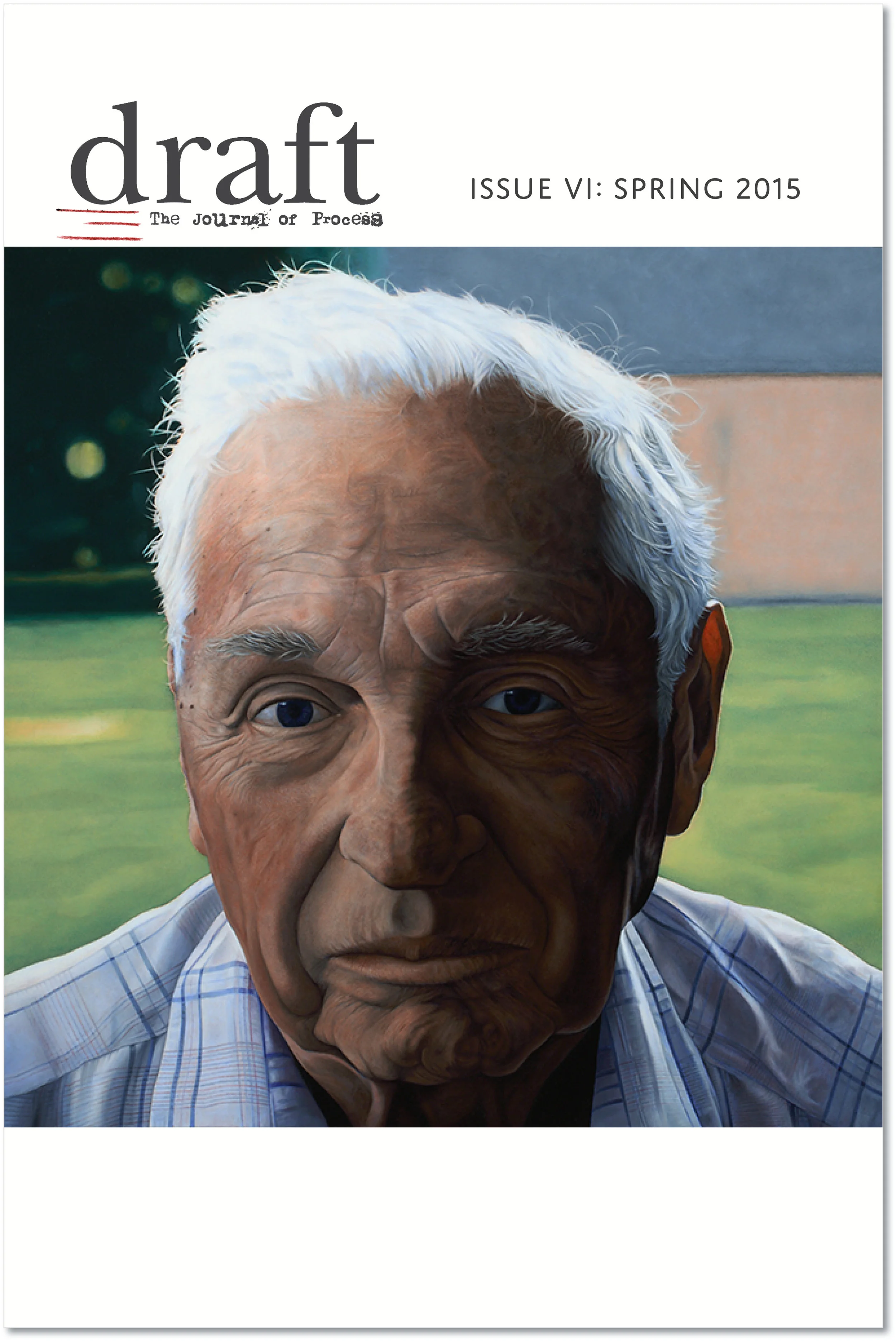
This issue’s cover artist, Michael Tarbi, is meticulous. Beginning with a photograph, the painting, “Leo,” demonstrates attention to detail and precision at each stage. Tarbi builds a scale grid and plots out each square centimeter of this fantastic, evocative portrait. His process showcases the tremendous preparation, planning, and patience with exhilarating results. Tarbi is also our first artist to come to us through unsolicited submissions, and we’re so pleased he had the patience not only for his artwork but for our extended production process.
**For Kindle users, please purchase your eBook directly from Amazon**
Poetry by Elisa Gabbert, Rauan Klassnik, Lara Glenum, & Rodney Koeneke
ABOUT THE ISSUE
Revision is not the process of “making a poem good,” nor “a good poem great.” Revision is changing a poem to more closely match its poet’s vision of its subject, whether that subject be denotative or perspective, story or song. The quality of a poem, like everything else in the world, is subjective. Great poets aren’t writing and revising to be great. Great poets are writing and revising because they’re interested in getting at something they’re really interested in.
This, it seems, can be anything. Lara Glenum weaves the attitudes and narratives that shape Western culture in with Western’s cultures greatest shames and crimes and excesses. Rodney Koeneke applies a lucidity of reference and perspective distinctly internet to the intimately personal. Rauan Klassnik twitches between sex & death, sacred & profane, and funny-ha-ha & funny-oof. Elisa Gabbert uses the strategies of the intellect to call attention to the ways in which the physical trumps the cerebral.
Just as poems can be about probably any subject tackled nearly any way, approaches to revision are, so far as we can tell, varied and endless. At the beginning of the editing process, the advice of others can be one of the easiest ways to achieve the disconnect from your work that will help improve it. Over time, however, one assembles an arsenal of tricks to help get one’s poems as close to their original intent, or eventual intent, or non-intent, or whatever, as possible.
We believe you’ll find something in the following pages striking and engaging enough to change your perceptions about what a poem can do, and we hope you carry it into your own writing practices. We appreciate everyone who took the time to share their work and thoughts for our inaugural all-poetry issue.
**For Kindle users, please purchase your eBook directly from Amazon**
Short fiction by Helen Phillips, Amy Bloom, & David James Poissant
ABOUT THE ISSUE
Issue 4 begins with David James Poissant’s “Venn Diagram,” a story from his debut collection The Heaven of Animals, which we urge you purchase as soon as is humanly possible. We met Jamie when we were all at grad school together at the University of Arizona in Tucson. Since then, we’ve followed his career as he’s received numerous honors and published in prestigious journals and magazines. Now, we’re pleased to feature one of Jamie's award-winning short stories and to share his insights in an interview.
This issue also features not one, not two, but three revelatory drafts of a short, magical, and deft piece of writing by Helen Phillips from her collection And Yet They Were Happy. Helen's story also inspired Mark Vollenweider's mysterious and intense artwork featured on the cover and throughout this issue.
And finally, we’re delighted that Amy Bloom was willing to open her archives and share an early draft of a story from a short story cycle that appeared in Where the God of Love Hangs Out. In addition to an interview with Bloom, the section includes an editors’ discussion about the draft and story and what we found intriguing that may help spark further conversations between readers, writers, editors, instructors, and students.
**For Kindle users, please purchase your eBook directly from Amazon**
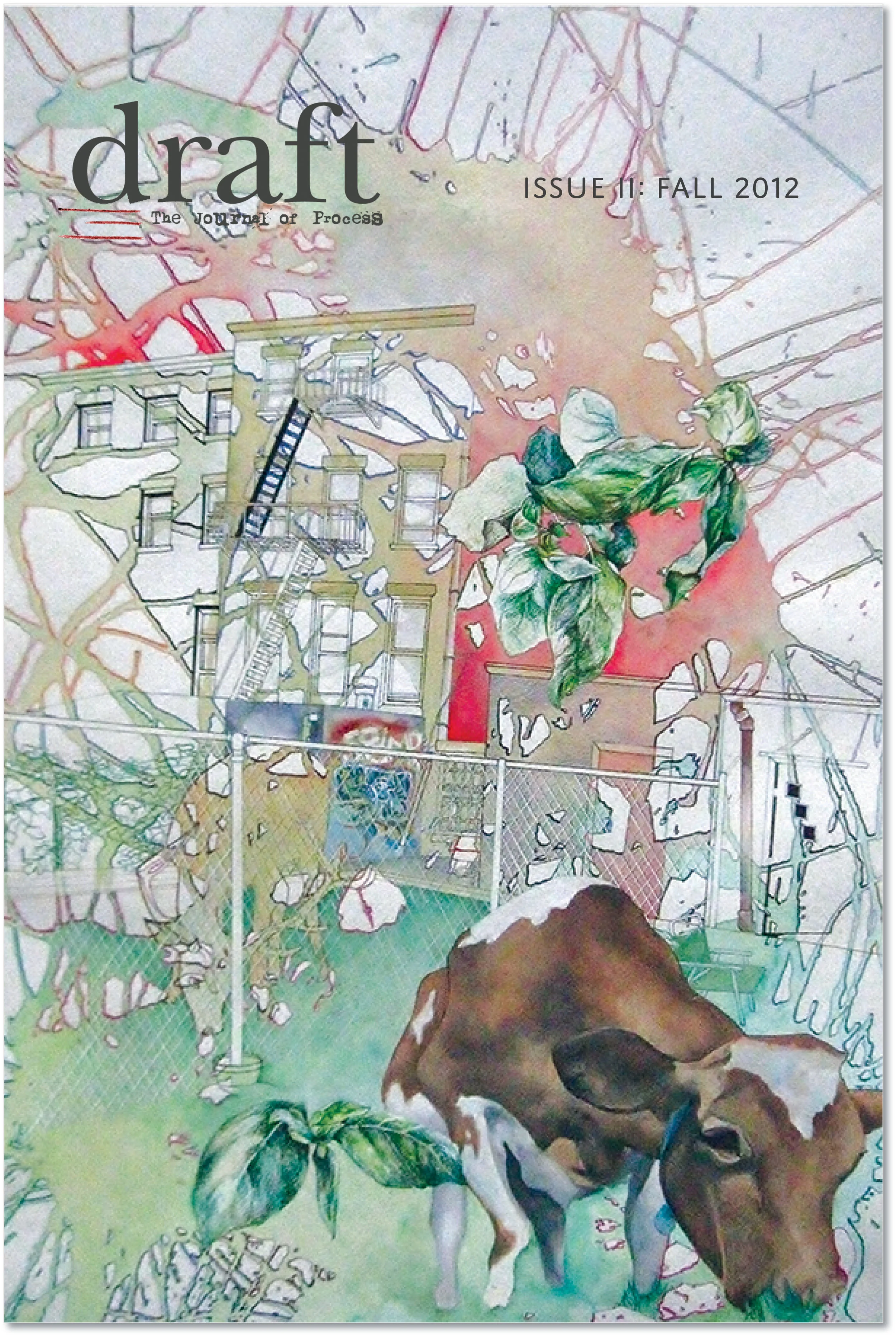
featuring fiction, poetry, and nonfiction by Roxane Gay, Matt Hart, and Joe Wilkins
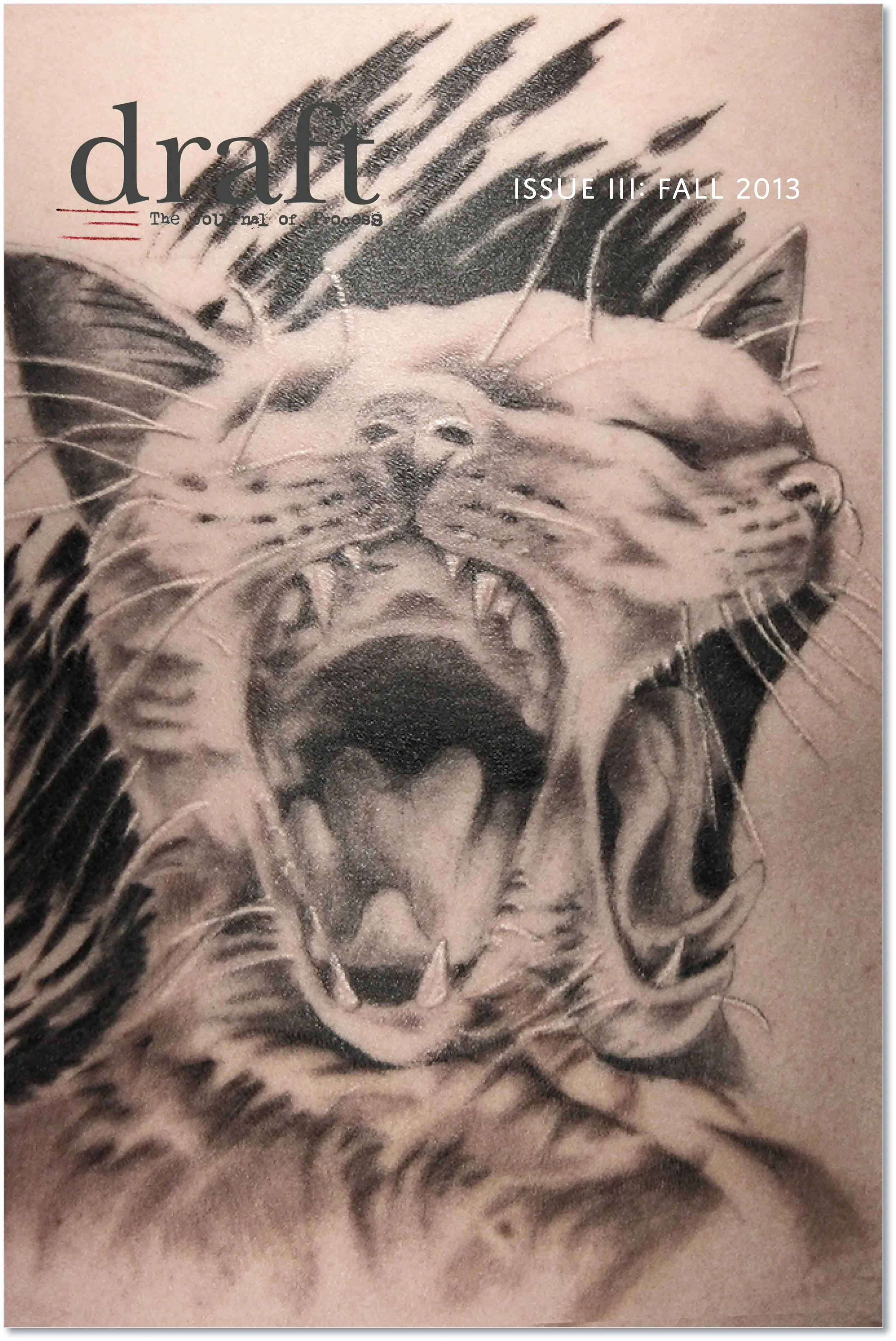
Our featured cover artist for issue three is Christian Zink, a tattoo artist in New York City. He and John O’Hara (also a tattooist at The Queen’s Ink) collaborated on a tattoo, inked onto John’s skin for our cover art.
**For Kindle users, please purchase your eBook directly from Amazon**
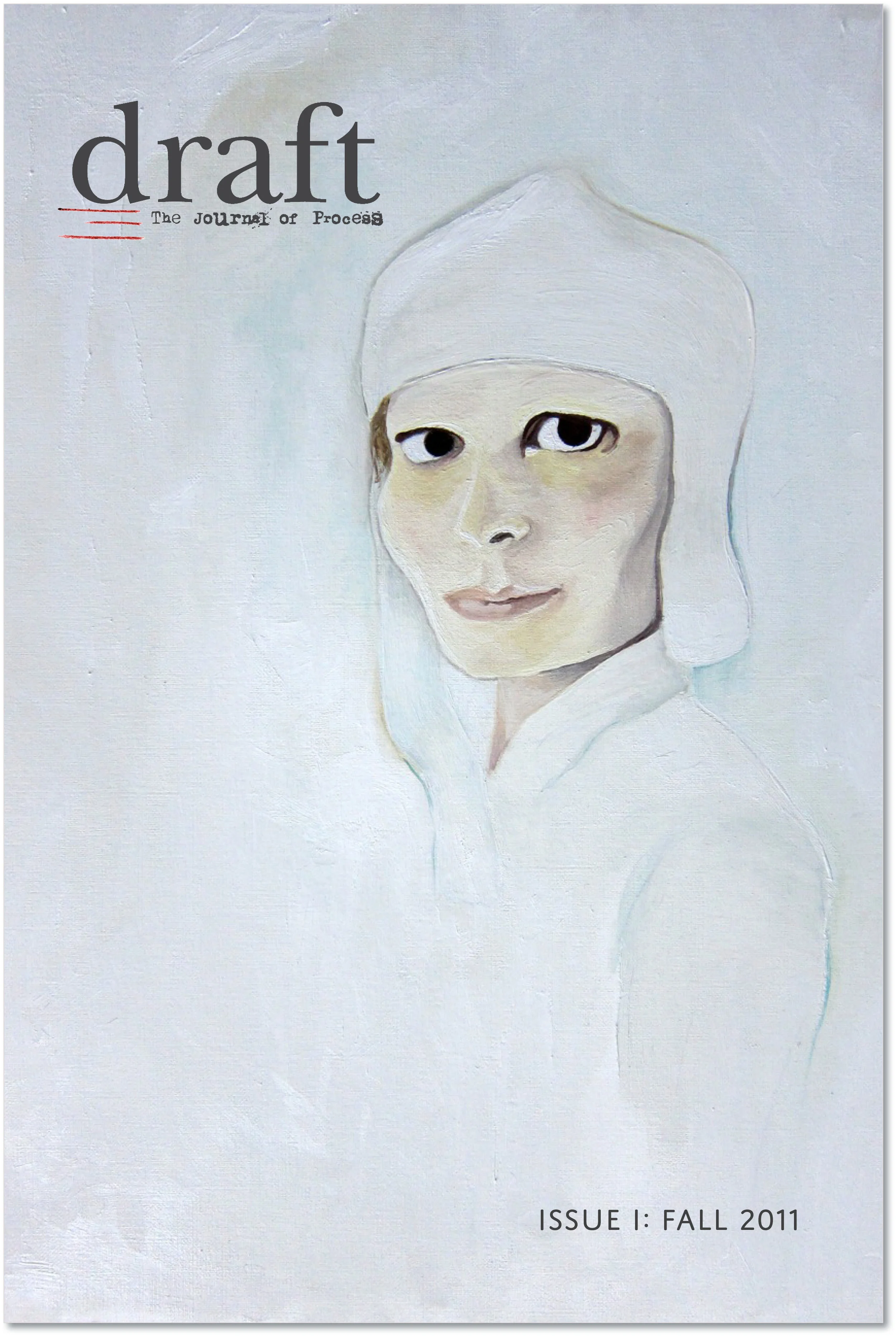
featuring fiction by Alicia Erian & poetry by Donald Dunbar
ABOUT THE ISSUE
Issue 2 is full of firsts. In it, we’re very excited to include our first poet, Donald Dunbar, whose first book Eyelid Lick won the 2012 FENCE Modern Poets Book Prize. Another first comes in the interview with Dunbar—a nod to the benefits of LSD. The interview is exciting, because the poet is so candid and thoughtful, uncovering some of the most mysterious processes of generating, revising, and crafting a series of poems. Whether you are working on a novel, short story, play, poem, or memoir, this poet’s advice on writing is helpful and liberating.
We’re also featuring the first story from Alicia Erian’s exquisite collection, The Brutal Language of Love. You might know Erian for her novel Towelhead, which was turned into a movie in 2007, directed by Alan Bell. We were alerted to her short stories by the always fabulous Roxane Gay, and we’re so glad we were. Erian’s stories are combine dark wit, surprising characters and a lot of heart in a collection that’s unforgettable. Standing Up To The Superpowers, in this issue, will probably wind up being one of your new favorite stories, as it has for us.
And finally, draft is featuring writing exercises submitted by our readers for the first time in this issue.
**For Kindle users, please purchase your eBook directly from Amazon**
featuring stories by Stacey Richter & Matt Bell
ABOUT THE ISSUE
In this issue, Stacey Richter, one of our very favorite writers, gives us a new lens on her story “Velvet,” which first appeared in her collection Twin Study. “Velvet” re-imagines the hero’s journey with a butt-sniffing dog as the protagonist, and Stacey elucidates her process in a hilarious and thoughtful interview.
Matt Bell’s “Hold On To Your Vacuum” explores the darkly playful realm of a high-stakes game. An early draft that originated from a dream, Matt's story became a controlled tale of regret and hope through careful revision on the global and sentence level. Matt shares his experience writing and rewriting "Hold On To Your Vacuum" in an interview that covers the music he listened to while drafting to the detailed work of syntax and diction revision.
featuring screenplay drafts by director Chris Radcliff,Carmen Maria Machado’s groundbreaking short story “The Husband Stitch,” and a never-before-published Ursula Le Guin draft written in 1963, with artwork by Mark Vollenweider
ABOUT THE ISSUE
Issue 7 opens with a script, the first time we’ve featured screenwriting in our journal. Chris Radcliff’s film, The Strange Ones, is an unsettling quest story, centered on a young boy with a secret past and an ambiguous relationship with his traveling companion. The film maintains mystery and suspense throughout. The screenplay is a marvel of restraint and selective omission, showing respect and trust in its audience to follow along and invent for themselves. In this issue, we have a sequence of scenes from the original draft and the final shooting script of The Strange Ones, revealing reworked moments, shifted settings, and reimagined characters. Creating the mystery on screen was accomplished through hard choices and a lot of discovery on the page. The conversation with Radcliff about the process of writing and rewriting for a visual medium was a fascinating shift for draft, and we hope to feature more work by writers across disciplines.
Carmen Maria Machado’s short story collection Her Body and Other Parties has been a cultural sensation since its publication in 2017, demonstrating that bold, feminist-forward stories that bend genre and embrace experimentation not only can sell, but are precisely what a vast readership are hungry for. In this issue, we feature a first draft of one of her most widely-read stories, “The Husband Stitch.” Carmen’s process of writing this story is a wonderful example of how a writer can use an urban myth to inspire her own work, how source material can enrich a story that otherwise feels thin, and how to take cues from oral storytelling to augment and contextualize a story.
Last but certainly not least, we’ve managed to retrieve a snippet of a first draft from none other than the sci fi goddess herself Ursula Le Guin. And what an honor it is to print in our pages. While the first draft and final work are not direct re-write comparisons, you’re able to see Le Guin’s first stab at her Earthsea series, and read that against the vastly revised and rethought prose of her finished book. As we weren’t able to speak with Le Guin about her revisions, we both synthesized our own thoughts about the drafts in our own short critical pieces after the drafts, arguing both for and against her revision in ways that we hope are thought-provoking and instructive.
Our cover art comes from a draft favorite Mark Vollenweider, whose impeccable line work and imaginative renderings bring to life the many women of Machado’s story. Postcards of each woman on the cover of Issue 7 are available for purchase on our site.