Welcome to
draft: The Journal of Process

Featuring stories, first drafts, and interviews with authors of note, draft is a unique print publication emphasizing the importance and diversity of the creative process. We’re interested in mechanics, techniques, approaches, triumphs, failures, concussive frustration — everything that goes into crafting a great piece of creative writing.


“Shame, for me, provokes the best work.”

-Alicia Erian, “Standing Up To The Superpowers,” Issue II

EXPLORE ISSUE II FALL 20I2
FEATURED AUTHORS


ISSUE ARTIST

Alicia Erian has published a short story collection, The Brutal Language of Love, and a novel, Towelhead, which was made into a movie by Alan Ball in 2008. She was the Newhouse Visiting Professor of Creative Writing at Wellesley College from 2004-2008 and currently teaches at Northeastern Illinois University in Chicago.

Donald Dunbar lives in Portland, Oregon, and helps run If Not For Kidnap, a reading series and maker of small things. His first book, Eyelid Lick, won the 2012 Fence Modern Poets Series. He’s published two chapbooks, Click Click (Gold Wake Press 2010) and You Are So Pretty (Scantily Clad Press 2009), and a third is forthcoming from Mammoth Editions at the beginning of 2013.

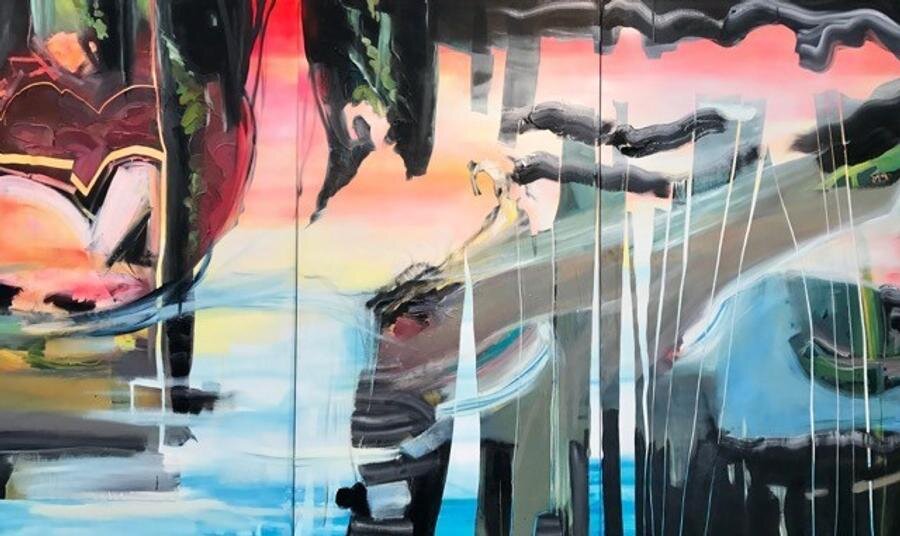
Nicole Handel Brooklyn-based artist Nicole Handel’s work reflects inspirations drawn from the vibrant community of her adopted hometown of Bed-Stuy Brooklyn. Vibrant watercolor paintings juxtapose abstract illustrations with realistic images, the architectural precision of urbanity intersecting the dreamlike world of the imagination. Raised in New England but residing in New York City, Handel integrates her pastoral background with the spatial constraints of the street scape in her work. The artist studied undergraduate drawing at Pratt Institute of Art and Design. Her work has been featured in exhibitions throughout New York, New Orleans and Massachusetts, including the Antenna Gallery, Greenpoint Gallery, Fountian Art Fair Miami, and currently at Yes Gallery in Brooklyn, as well as a recent feature in Ladygunn Magazine.

Price:
$12   per issue


Special Discounts:
We offer classroom copies purchased in quantities of 10 or more for a 20% discount.

$10     per issue — Academic Bulk (10+ Issues)
$20     One Year / Two Issues
$38     Two Years / Four Issues

Purchase online with PayPal:

Select Preference
How did you hear about draft?

Questions about purchasing?
Contact us. draftjournal@gmail.com

REVISION EXERCISES

Creative Writing Exercises for jumpstarting your stories or for use in the classroom. Downloads available.

And if you have a good one, please share it with us!

World Building Through Map Making
World Building Through Map Making  by Hunter Liquore

Writers are creative animals. We like to jump right in when we get a new idea without taking proper steps to consider what the new world looks like. One way to get to the typing faster is to create a map. When we visually see what the story location looks like on paper, we can begin to identify what’s missing.

Let’s say you’re writing a story about a family that lives on a farm in the late 1800s. (Think O Pioneers by Willa Cather.) Your main character works in town, two miles from the farm. If you were to make a map, you would immediately mark these two locations. But what else is there? What surrounds the farm? What might your character encounter on that two mile journey?

Some questions you might ask yourself are:

  • Are there government buildings, like a sheriff, court, prison, a post office?
  • What natural features are present? Are there forests or lakes, rivers, hills, prairies, mountains, and so forth?
  • What stores might be in the vicinity? What other services are available, like a barber, smoke shop, bank, restaurants, and so on?
  • Are there places of worship?
  • What does the neighborhood look like? Who are the neighbors?
  • What historical events have happened in the area? Do any famous people live nearby?

  • What seasonal events might take place in this area? Is there an annual fair that people come from miles to go to?
  • What wildlife live in the area?

The key is to see your world from every angle. Even if your setting is only in one room, or a single building, you might consider what is beyond the four walls.


Exercise:


Make a map of your world. Start with the most obvious features. In the above example it would be the farm and nearby town. Now look at all the open space. What can you add in those bare spots to make your town more real?

Here are some ideas:

  • Library
  • Water tower
  • Prison
  • Ball field
  • Natural preserve
  • Carnival
  • Historic monument
  • continue reading

What you add determines the outcome of your world. For instance, if you add a carnival to your world, the characters will probably attend, or at the least, discuss it. The goal is not necessarily to add details randomly, but to enhance your overall setting. In doing so, you have the opportunity to create a unique world, one that you can now navigate with ease.

Creating a map every time you start a story will allow you to fully imagine and then create this new world. When you go to lay down those details in the story, they will no longer be vague. “The library’s over the next hill,” becomes, “The library sat adjacent to the town’s water tower, next to the dirt trail that runs past the sheriff’s office.” The more detail you can provide, the better your readers will see and appreciate the world you’ve created.Download

A Pushcart Prize nominee, Hunter Liguore earned a BA in History and a MFA in Creative Writing. Her “anomalous” work has appeared in Bellevue Literary Review, The Writer's Chronicle, Mason Road, The MacGuffin, Strange Horizons, New Plains Review, Barely South Review, SLAB Literary, Rio Grande Review, r.kv.r.y Quarterly and more. Her short story collection, Red Barn People, is now available. skytalewriter.com

MARY MILLER on Revision

I always loved Swink’s “Damaged Darlings.” Described as “an exercise in literary genetics whereby two fiction writers work collaboratively in a specific manner: the first offers a work-in-progress he or she has neglected for some time but still treasures; the second is brought on to take the blemished but beloved narrative and transform it into something new and more complete.” They published these collaborations in each of their three print issues, and they’re still my favorite stories in the magazine. In Newpages.com, Weston Cutter said of the “Damaged Darlings” in Swink 1, “The results are fucking brilliant, to be blunt, and both stories within, David Hollander and Nelly Reifler’s ‘Whatever We Were Beforehand’ and Amy Bloom and Chris Offutt’s ‘I Was Dancin’ with My Darlin’’ work as stories, as mysteries (which author wrote what?), as strange and beautiful harmonies.”

I have a handful of stories that I can’t finish, but I don’t want to trash them and I don’t want to strip out all the “good parts” and fit them into other stories, or (God forbid) try to turn them into poems. Why can’t I finish these particular stories? They often seem to be the ones in which I’m trying to follow the trajectory of what actually happened instead of allowing a nonfictional experience to spark a fictional story. How awesome would it be to have a writer who had no idea what had actually happened, or who these characters were, take over? Better yet, how about one of your favorite writers?


It seems that collaborative literature is coming back into fashion, or perhaps it never left. I recently opened up the new issue of PANK and read the first two poems, which were co-written by Elisa Gabbert and Kathleen Rooney. The poems are brief and have a singular voice, which makes them even more curious--did they take turns writing a line, pass them back and forth? Did they work in person or via e-mail? What if you hate what the other person has written? I don’t know, but I want to find out. I think we should start a clearing house, a place where we can post all of our “damaged darlings” and let somebody else have a shot at them.Download

FEAR-GOGGLES

John Gardner, though deceased and personally unknown to me, is a cool dude. He has two somewhat well known books -- the novel, Grendel, and the book on writing, The Art of Fiction. I happen to own a first edition of his excellent and out-of-print novel, The Sunlight Dialogues, which I have yet to have a conversation about, because no one's heard of it, let alone read it. For the most part, people will know The Art of Fiction, a book from which I hijack an exercise for my classes. Gardner's exercises go something like this: Describe a lake from the POV of a bird, but don't mention the bird. Or, Describe a barn from the POV of a man who has just committed a murder, but don't mention the murder. A good writer, he writes, should be able to convey to a reader that a man has lost his son in a war simply through describing a place, never having to mention the death. This is advanced writer territory, but its technique can be hammered home early in writing classes.

What I do with this exercise is ask all the students to write down an event or series of events that have put them in a particular mood. Some actual examples that students have written:


"Waking up, the first day after my partner died." (Certainly conjures a mood)

"Miraculously not being charged an overdraft fee by the bank when I had clearly overdrafted." (I love this one)

"Deciding to quit my job, and literally one hour before I was going to quit, being fired." (How would you feel?)

The students write down these events that elicit a specific mood-response, emotional response, then fold the paper, hand it to another student, but they do not look at the event on the slip of paper. These examples are from the adult education creative writing course, not the college. That's important to note, because what we do next is head to a bar.

At the bar, I tell everyone to get a drink, if they like, find a place to sit, get out a notebook, and then open up the slip of paper to find out what has just happened to them -- so, you're at the bar, and today you were not charged an overdraft fee when you had clearly overdrafted. Now, look around the room and describe everything you see -- the bar customers, what they are saying to each other, the bartender, the servers, the floor, the crap on the walls, the smell in the air, the beer on your tongue, the music from the jukebox, the displays on the megatouch game, and on and on. But don't mention what happened to you.continue reading


There's no such thing as a chair -- if you just lost your spouse, it's an empty chair. Everything in our sensory world comes through our mind and heart and looks, feels, smells, sounds, tastes different given our emotional state.

For the college kids, we go to a park if it's nice. Everyone likes a little field trip, don't we?

Then we come back together, share what we've written and everyone in class guesses what the emotional state was or the events that created it. It's a cool game.Download

PSYCHOLOGICAL TESTS AS WRITING EXERCISES

Psychological tests are very weird and typically rely on verbal interpretation, two attributes that comprise a good writing exercise.

Rarely do products of writing exercises become anything substantial. Perhaps a line, an idea that can be expanded, but on the whole they are what they are: exercises. Practice. Necessary when you're not performing, creating, inspiring yourself. At their best, these psychological tests as writing exercises get your brain going crazy, which allows you to do something new, which is what you want, isn't it?

The image above is a Rorschach "ink blot." How it works: ink is dripped onto a sheet and reflected when the sheet is folded. These are all symmetrical images, and the patient is to interpret what the abstract ink blots are. So if you say, It looks like a butterfly, then you're free to go. If you say, It reminds of the twisted monster in my demented heart, then you're likely not free to go. To use this as a writing exercise, simply list everything the image could be; then everywhere the "thing" could be; then everything the thing could be doing; then all the inner feelings of the thing. This creates possibles. Just possibles. And you created all of them. If none of these possibles is truly striking, at least your brain is being creative out of thin air. It jumpstarts the creative half. This


is a good thing.

A psychological test that seems designed for writers is the Thematic Apperception Test or TAT. Here is one of the test's prompts:

Pretty creepy, right? Yeah. This psych test is a series of suggestive drawings, from which the patient writes a paragraph detailing what has happened just before the moment captured in the image; a paragraph detailing what is happening currently in the image; and lastly, what happens next. Great writing exercise. To make it more exercizeish, simply write out what happened before, what's happening presently, and what will happen, then rewrite the same scenes as comedic, then horrific, then romantic, then baroque, then minimal, then maximal, and on and on.

I do these with the writing classes, but I don't tell the students the origin of these prompts. This makes reading and hearing their interpretations a sort of sick game of discovering the hidden psychology of the group. Then I tell them where the images are from. Then we all eye each other. Then we laugh.Download

EMBLEMS OF ANTI-HOPE

One technique I've found useful in revising is coming up with one word that my story is about in an effort to find a center. For instance, say I finally realize that the story I've been trying to wrangle for months is about "hope." Great. Then I ask myself, Does the main character lose hope or gain hope? (Normally, they will abandon all hope in my stories.) Then, I have some sort of idea that the story begins with a scene that demonstrates hope, then contains more scenes with emblems or messages of "anti-hope," and finally ends with a loss of hope. Thinking in really simple terms like this helps me see where I'm going more clearly. "How does this scene communicate 'anti-hope'?" I can ask myself. "Is the half-eaten donut an emblem of anti-hope?" You get the idea.


This might seem somewhat simplistic, but when I'm writing around in circles, unsure of what I want to say or why I'm writing the story or what the story even is, this has helped. I find if I just try to write something that I hope my audience finds interesting, sometimes it devolves into something scandalous or shocking, and then, after a while, it just feels like US Weekly (which has its delights, but that's not the effect I'm going for). It also, generally, gets me nowhere, because I am really concerned with plot and quirkiness and cleverness and not concerned with what the story means. In a story, infidelity for the sake of titillation is boring, but infidelity as "anti-hope," or whatever, just might work.


I also wanted to share this passage from Louis Menand's essay "True Story" in The New Yorker a few years ago. I think it's quite nice.


A short story is not as restrictive as a sonnet but, of all the literary forms, it is possibly the most single-minded. Its aim, as it was identified by the modern genre's first theorist, Edgar Allan Poe, is to create “an effect”-- by which Poe meant something almost physical, like a sensation or...a frission. Every word in a story, Poe said, is in the service of this effect. It's all about...getting the ball in the hole with the fewest strokes possible. Sometimes the fewest strokes can be a lot, but at the end there has to be the literary equivalent of the magician's puff of smoke, an outcome that is both startling and anticipated. The reader of a story expects an effect, and expects to be surprised by it, too. If you try to name the sensations that stories deliver, you find yourself with the sort of terms that (if you were a college teacher) you would write “vague” and “ugh” next to when you saw them in a paper: a pang, a shiver, a mental click, or what you might call (if you were a college student) a general sense of “Whoa.” Whoa is not exactly a term of art. You know it when you feel it, though.


In that same article, Menard also wrote that a good story will provide “a sudden apprehension of the way the world unmediatedly is.” Kind of like Mamet's uninflected scene obsession (for those in screenwriting). Fine goals, I think, to uncover "the way the world unmediatedly is," to create frission and smoke. All very cool. All very difficult.Download


WEB FEATURES &
BLOG ARTICLES

We are looking for writers, editors, student-writers, interested readers, disinterested readers, champions and adversaries of the writing world, writing profs and instructors, artists, and any combination thereof to write something for our website/blog. This can be anything — writing exercises, dispatches from the classroom, anecdotes from revising, editing, submitting, triumphing, failing, laughing, what-have-you. If you would like to propose a regular column for our website/blog, please send a good example and a description of the project. Try us out, we are pretty open over here.


ORIGINAL ARTWORK

We are always looking to feature visual art on our front and back covers from exciting new artists. For our purposes, we need to see a final, finished, work accompanied by several images of the work as it was in progress. We are a journal of process and want to show the visual art in stages — from rough sketches all the way to final product.

Size limit: The best quality images you have.

SUBMIT

draft: the journal of process, is a new educational literary journal which features stories, drafts, and interviews about the writing process. Our mission is to emphasize the importance and diversity of the creative process, especially for new writers and students in writing classrooms.

In draft, we’re interested in mechanics, techniques, approaches, triumphs, failures, concussive frustration — everything that goes into crafting a publishable piece of creative writing through revision. We ask authors to reveal their tricks behind the illusions. To tell us how it’s done, or try to.


draft would like to reach as many writers, MFA programs, college and university English departments, writing institutes, writing conferences, retreats, and workshops as possible. We hope our detailed examination of the important and mysterious work that goes into story making will help to illuminate your own process.

MEET DRAFT
MEET DRAFT


Editor: Mark Polanzak has published stories in Third Coast, The Southern Review, and The American Scholar, among others. He teaches writing at the Berklee College of Music in Boston.

Editor: Rachel Yoder has written for The New York Times, The Sun Magazine, Kenyon Review, and other publications. She teaches writing at the University of Iowa in Iowa City.

Contact the Editors
draft Journal
5 Everett Street, #1
Cambridge, MA 02138
draftjournal@gmail.com

Designer: zzGassman design workshop is an interdisciplinary design collaborative established by Bob and Shannon Gassman. The workshop operates as a live/work practive that comprehensively unites the act of design and the process of living. www.zzgassman.com

WHAT MAKES DRAFT UNIQUE?
WHAT MAKES DRAFT UNIQUE

IN-LINE COMPARISONS
Compare and contrast specific phrases in the draft and the final writing, while immediately grasping the change that has occurred between the two.

EXCLUSIVE INTERVIEWS
Insight and advice from the authors on writing, process, and revision.

NOTE MARGINS
Convenient wide margins allow space for classroom notetaking and references to related interview questions and exercises.

FEATURED ART
Each issue features a new piece of art and discovers the process of revision in the visual arts.

UNIQUE SIDE BY SIDE LAYOUT
draft publishes first drafts and final works on the same page layout for a distinct, analytical perspective on the process of revision.

DOWNLOAD SAMPLE: Issue I
EVENTS

Not Reading at AWP

Are you going to AWP in Boston in March? Really. I’m sorry. We are, too.

To counteract all the too-long readings and too-long panels we’re joining Barrelhouse, Hobart, and PANK for a Not Reading on Thursday, March 7. There will be free drinks. I have heard that the path to these free drinks is through the above-mentioned journals’ bookfair tables. I have heard this event will be fun insofar as it will be drunken. It will be at a bar called Lir, which is no name for a bar whatsoever, but so be it. Here’s the Facebook invite for more info. Hope to see you there.

Mission Creek Festival Reading

This past weekend draft co-sponsored a reading at the Mission Creek Music & Lit Festival in Iowa City along with [PANK] Magazine and the up-and-comer Uncanny Valley, a new lit mag based in Iowa City. [PANK] Assistant Editor Abby Koski was the picture of poise as she hosted, introduced, and read her own poems. Check out her equally eloquent re-cap over at the [PANK] blog.


NEWS

The good people over at New Pages just posted a review of our second issue. Choicest quotable from said review reads as follows:

…draft invites you to think of a creative work as the product of a process. Many writers are stymied by the challenge of doing everything “right” the first time. This journal does a great public service, reminding us all that it’s okay to “make mistakes,” so long as you’re putting words on the page.

Thanks, New Pages (and reviewer Kenneth Nichols) for all the good work you do in the lit community! We appreciate you.

“…the questions the editors ask are exactly the kind readers-writers would want to know…”
“Write, Read, Revise: A Journal of Process.” by Lita Kurth

draft: the journal of process… is a dream discovery for teachers of creative writing at the secondary, undergraduate, and graduate levels.”
draft Interview: Lit Mags in Class, Luna Park Review, May, 2011

draft Interview: Moveable Type, Writer’s Chronicle Magazine, Feb. 2012

FROM THE DRAFT BLOG

  Which portrait in this series came first? Second? Third? And how did your understanding of your subject and the emotions of the works develop through each iteration? By title, “Glance” came first (and was one of the first in this entire series including these four works) followed by “Leaning”, “Holding” and then “Twist.”  I [...]


Friday dose of writing inspiration: Depend on rhythm, tonality, and the music of language to hold things together. It is impossible to write meaningless sequences. In a sense the next thing always belongs. In the world of imagination, all things belong. If you take that on faith, you may be foolish, but foolish like a [...]


  A few months ago, I had a light obsession with the City of Boston’s Twitter account.  Boston would tweet “Thanks for letting us know” and I had to know what the situation was.  I would scroll through and expand conversations on parking, water leaks, and snow plowing. Mostly, I was impressed with the city’s responsiveness—there [...]


website by zzGassman